Zachar Law Firm – Willing to take the next step for its clients

By Sherry Jackson

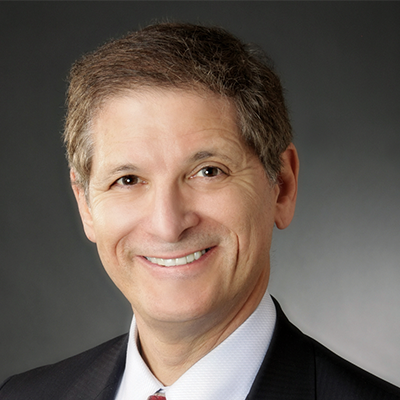
With 27 years as a trial attorney, Christopher Zachar, owner of Zachar Law Firm, prides himself on his work ethic and commitment to his clients.

He grew up in Iowa, played high school and college football, worked in cornfields from dawn to dusk and understood the meaning of hard work at a young age. In fact, Zachar says really he is still just a “good ole’ hard-working, Midwestern boy” with a passion for doing what is right. “Attorneys are supposed to work for their clients—it is our job,” Zachar says.

He then continues: “If someone has been injured in an accident and they start researching personal injury law firms for help, how do they know which attorney to choose? All law firms sell a good story, but how do you know which are really good, which will provide the best service and get you the best result? Who will you be able to contact regularly, rely on to have a good reputation and be experienced enough to handle your case competently? How can you really know?”

According to Zachar, people should look for an injury law firm that 1) focuses only on injury cases, 2) one with experience and 3) one that actually files lawsuits when needed. Law firms that do not regularly file lawsuits for their clients are the firms that are just not willing to put in the time and effort to get a client the very best result. Zachar says a law firm must be willing to file a lawsuit, if necessary. If not, then you are simply caving in to the insurance company’s last best offer every time.

As an undergraduate at ASU, Zachar was at a crossroads, trying to decide his career path. He had always held family friends who were attorneys in high regard but had not thought seriously about pursuing a law career. He decided to take an attorney friend out to lunch to pick his brain and ask questions. After that conversation, Zachar decided a career in law was the absolutely right direction.

He earned a bachelor’s degree from ASU in 1989 and his law degree from the University of Arizona College of Law in 1992. He is admitted to practice law in all city, county and state courts in Arizona. After passing the Arizona State Bar exam, Zachar worked for a personal injury firm for about three years before opening the doors to Zachar Law Firm in 1996, focusing only on personal injury and wrongful death cases. He is a Certified Specialist in Injury and Death law (less than 3% of Arizona attorneys are certified specialists) and has been named a SuperLawyer of the Southwest recently for 13th year in a row.  In 2010, he was admitted as a member to the U.S. Supreme Court, sworn in personally by the full court in Washington, D.C.

According to the State Bar of Arizona Board of Legal Specialization, only lawyers who have “demonstrated superior knowledge, skill, integrity, professionalism and competence in a specific area of law, to better serve the public,” can achieve the certification.  Zachar has been a Certified Specialist since 2003.

Attorneys must be willing to do what is needed to get their clients the best result for their case.  If that next step is filing a lawsuit, is your attorney willing and prepared to do that?  You better know that when you make your attorney decision.  Not all firms are set up or prepared to do that, but it’s what Zachar Law Firm does. In fact, there are numerous personal injury firms (even some advertising firms) who send their cases to Zachar to litigate. They know litigation means a lot of work and costs for the firm. Zachar Law Firm accepts the responsibility to do what is needed to get the best results.

Maricopa County can be a difficult place to negotiate motor vehicle cases, Zachar says, because insurance companies have changed the perception of accidents, lawyers and lawsuits.  Insurance companies have spent a lot of money over the years to make society believe that injury claims and injury lawsuits are only made by “greedy people”, and that there are too many lawsuits and too many frivolous lawsuits.  It is simply not true.

Zachar explains:  The court system was established in the United States Constitution in 1787 as a part of the judicial branch of our government.  You know why?  Because our forefathers knew, if we were to live in a free, lawful and peaceful country, that we would need a peaceful, orderly and organized way of resolving our disputes (no more ‘eye for and eye’ justice).  Hence, the court system as we know it was developed.  Indeed, that is all the court system is—a place to help people resolve disputes.  The term “lawsuit” is simply the document that starts the formal process.  So, how can it possibly be bad or greedy for a citizen to seek a legal, peaceful and orderly means to resolve his/her dispute?    Of course, it is not, but that is what insurance companies want the public to believe. Tell them “everyone is just trying to get rich”, and watch the system deal with that.

  Because of the harsh climate created by insurance companies, most personal injury law firms encourage clients to just settle for the low insurance company offers.  Many of the personal injury law firms simply take the last insurance company offer, settle and move on to the next one.  And, sadly, the injured victim does not know the difference.

The “best result” varies depending on the facts of each case. Zachar spends the time necessary to educate his clients on how the legal system works so they can understand what to expect in the process, and so when it comes to a decision time, they are better prepared to make the right choice because they understand it.

Zachar’s recalls his best-case result:  In December 2015, a Maricopa County jury awarded $47.5 million to two families whose wives/mothers were killed in a head-on collision on Interstate 10. The jury found the state of Arizona negligent for failing to have median barriers in place, which would have saved these women’s lives. Three years earlier, in February 2012, a Maricopa County jury awarded Zachar’s clients $7.8 million for the same circumstance (this case was first turned away by a top law firm in California and a top law firm in Arizona). Zachar’s reputation for taking the tough cases has been cemented in the legal community. Many attorneys reach out to Zachar for help given his work ethic, commitment to his clients and trial skills.

On top of all of this, Zachar Law Firm has a strict policy that the firm will not take a fee higher than the amount its client receives in a settlement, even if it is lower than the percentage agreed to. Zachar explains that “clients hire attorneys us help them, not to help ourselves.”

Zachar once had a client with a slip and fall injury. No other attorney would even talk to her. ZLF took the case, rejected the low offer from the insurance company, filed a lawsuit, put in the work necessary to prove her case and eventually got a good settlement offer. The client was so appreciative that she agreed to settle only if Zachar agreed to share the settlement amount equally, which amounted to a higher fee to Zachar Law Firm than what was first agreed to.  “That doesn’t happen every day,” Zachar says with a laugh, but it is a case that I will always remember—having a client so appreciative of our hard work, when no one else would even talk to her.

Every case doesn’t have to go to court. About 25% of Zachar Law Firm’s cases proceed to a lawsuit, and each case and client is independently evaluated. It really depends on the case, the client and the offer.  Regardless of what insurance companies want people to think, injured people are not trying to “get rich”.  They want to get their bills paid, lost wages reimbursed for missing work and then something for their pain and trouble the accident caused them. That’s it. Unfortunately, in today’s climate, many times that means filing a lawsuit.

Attorneys who practice personal injury law, with the goal of truly helping their clients, must be ready and willing to file a lawsuit. Why?  Because insurance companies must know you are serious and must know you are willing to take the case as far as necessary to get your client the best result. Again, this requires time, a financial investment and a lot of hard work. If not, you will never get the best result for your injured client because the insurance companies will know that this attorney or firm “settles everything.” So, they lowball the offer.

Zachar Law Firm gets better offers for its clients because the insurance companies know that ZLF is serious about filing a lawsuit if the offer is just too low.  ZLF simply will do what is necessary to get the best result. No one wants to have to file a lawsuit, and most cases do not—but if the insurance company does not believe that you are prepared to do just that, how will you ever get the best result?

As hard as he works and as much as he loves the practice of law, Zachar’s family comes first. His wife, Michelle, and their three kids, Tommy, Macrina and Danielle, love to travel, explore new places and spend as much time together as they can.  Having his own firm has given Zachar the flexibility to never miss the kids’ events and be extensively involved in school activities and organizations, as well as various local charities in which he is interested.  Zachar Law Firm supports and volunteers with local charities including Ronald McDonald House and Phoenix Children’s Hospital Foundation.

“There is a good balance. I do not feel overburdened ‘most of the time’.” he says with a laugh. Zachar is very proud of the firm he has built and is most proud of the people and staff of the Zachar Law Firm.  “We have an experienced, caring staff, who work really hard for our clients. Our folks’ bond with clients and look out for them as they would friends or family.”

Every day, Zachar strives to meet his duty to his clients, his staff and the legal profession. At Zachar Law Firm, it isn’t just about a good monetary recovery. It’s about making sure the client is getting the care they need and then, turning the page after a rough patch of road. The firm guides clients through that uncertain path, and ZLF attorneys and staff have been doing this for the last 24 years.

Personal Injury and Wrongful Death law are all ZLF has ever done, and it is all it does now.  And, Zachar Law Firm will continue to do it the old fashioned way, with hard work, to continue meeting and exceeding client the expectations, confidence and trust when they decide to retain Zachar Law Firm.

Zachar Law Firm

714 E. Rose Lane, Phoenix

602-494-4800, zacharassociates.com
Pausing, Processing And Persuasion

Originally written by John Blumberg of Blumberg Law Offices

I was reading an academic article about persuasion science. I paused when I got to the end of a sentence. I wasn’t sure I understood it. After thinking about it for a few seconds, I was sure I hadn’t understood it. (Academic articles are frequently laced with jargon that the authors assume the readers understand. The sentences tend to be long and are packed with information.) I went back and read it again – this time more slowly. Then, I paused again. I understood it better than the first time I had read it, but still needed a little time to think about the subject. This is how most people process what they read. Students who don’t stop to think about what they have just read will likely do poorly on examinations because the ability to remember is closely linked to whether they understood and processed the information. Jurors listening to lawyers and witnesses don’t have the ability to press a pause button so they can think about what they just heard. This blog discusses how lawyers can present information so that jurors will be more likely to remember and be persuaded.

That which is learned is persuasive

There is science behind how people learn. The brain is not like a sponge that absorbs what is poured into it. Memories are formed only when information is understood and processed. Daniel T. Willingham is a professor of cognitive psychology at the University of Virginia and specializes in the science of education. He has written that “memories are formed as the residue of thought. You remember what you think about, but not every fleeting thought – only those matters to which you really devote some attention.” Once a memory is created, it can be accessed. Memories are treated by the brain as a reliable source to recognize previously-learned information as well as to interpret new information. What does this have to do with trial advocacy? Persuasion occurs when the brain creates a memory that is later recalled and relied on as true. The challenge, therefore, is to present your case so that jurors have time to think about what they have heard and seen.

Pause

The process of learning requires first that the listener understand. Understanding results only when the information presented can be related to something already familiar. In other words: an existing memory or understanding. The next step in learning is for the information to be processed. Processing requires time to think about what was just heard. If trial lawyers don’t allow jurors any time to process an important argument or a witness’s answer, the result might be a vague or defective recollection. Persuasion requires pausing. This is a challenge because silence in the courtroom feels uncomfortable. But during that silence, jurors are solidifying memory.

Refresh

Research has shown that people tend to believe the truth of a statement if they have previously heard it. It has the illusion of truth. The more often the statement is heard, the more likely that it will be perceived as true.  This is not necessarily a bad thing; rather, it is an essential aspect of how people can learn something that is true, then create a mental shortcut. It is theorized that the first time a statement is heard, it is embedded in memory, and when it is heard again, the previous exposure creates a feeling of familiarity. This familiarity, in turn, creates fluency, or ease of recognition, which has the feeling of truth. This is called the repetition truth effect.  During a trial, there are many opportunities to repeat important facts or themes.

Pausing allows jurors to think about what they just saw or heard.  Repetition is a way to refresh and strengthen a memory. Both are crucial to persuasion. In the 1920’s, Coca Cola coined a slogan, “Pause and Refresh.” That is a way for trial lawyers to remember these two important aspects of persuasion.

John Blumberg
John Blumberg

John P. Blumberg is a board-certified trial lawyer and a board-certified specialist in legal malpractice and medical malpractice cases. He is also on the national Board of Directors of the prestigious American Board of Trial Advocates. Mr. Blumberg is an instructor of trial and litigation skills and has written dozens of articles for professional legal journals. He acts frequently as an arbitrator and mediator.

Mr. Blumberg has been selected as a Southern California Super Lawyer every year since 2004, an honor accorded to only the top 5% of practicing attorneys. His superlative results earned him membership in the prestigious Million Dollar Advocates Forum, open only to the top trial lawyers in America.

Watch Episode 35 of Trial Lawyer View Podcast featuring John Blumberg here.

Standard Contract

Originally written by John Blumberg of Blumberg Law Offices

Heuristics are common understandings, which are mental shortcuts that spare the brain from expending energy on the hard mental work of analyzing facts and information. Many heuristics are truisms that people have decided are correct, regardless of whether they actually are correct. For example, the description of “a standard contract.” For the lay person, it likely brings to mind a written agreement that contains benign and accepted terms. In other words, nothing to be concerned about.

“Standard contract” was a punchline in my family. “It’s just a standard contract.” Shortly after my father began his law practice in 1955, he was retained by a burglar alarm company to create a contract for its customers to sign. In those days, a word processor was a typewriter; computers wouldn’t be in use for thirty years. When his client’s customers were presented with the typed contract, they would scrutinize it carefully for any unacceptable provisions. My father had an idea: he took the typed contract to a local printer who created an offset lithography of the document, and at the top, in large, ornate letters were the words, “Standard Contract.” Afterward, when his client (the businessman) presented the contract to prospective customers, he would say, “Oh, it’s just a standard contract.” And most didn’t hesitate to sign it.

My father died in 2008. And when my mother died in January 2015, I went to the mortuary to sign the necessary papers for her cremation. My heart was heavy and even though I scrutinized documents on a daily basis in my law practice, I did not look forward to this task. Although I was following her express wishes, these were the papers that would commit my mother’s remains to her final destination. This was not a routine transaction for me. The young woman employed by the mortuary gave me the contract; I read it carefully. The last paragraph said,

“I agree to indemnify, release and hold the Crematory, Funeral Home, their affiliates, agents, employees and assigns, harmless from any and all loss, damages, liability or causes of action (including attorneys’ fees and expenses of litigation) in connection with the cremation and disposition of the cremated remains of the Deceased . . . .”

I looked at the young woman and said, “Please strike this paragraph from the contract because I won’t agree to this. This is a business licensed by the State of California and is obligated to follow laws, regulations and standards. When professionals provide services, they are expected to stand by their services, and if they cause harm by mistakes or negligence, they do the right thing and compensate those who have been harmed. People come here at one of the worst times of their lives and expect to be treated fairly. They don’t scrutinize a contract like a lawyer to detect overreaching and unfairness. This isn’t acceptable. Strike the paragraph or I’ll have another mortuary transport my mother to their establishment to provide these services.”

Then, she said, “But sir, it’s a standard contract.”

When I insisted that the provision be stricken, she refused, and I walked out. I could see my father’s face, nodding and smiling at me. I was able to find another mortuary that did not require that I release, hold harmless and indemnify.

What does all this have to do with persuasion science? There are descriptive words and phrases that bypass scrutiny, and assumptions that people want to believe are true. Comedian Steven Colbert coined the word “truthiness” which is defined as “what you want the facts to be, as opposed to what the facts are. What feels like the right answer.” Subsequent academic research has actually analyzed many of the factors that contribute to the “truthiness effect,” and that will be discussed in a later Persuasion Science Summary. But the takeaway for trial lawyers is that if you want your message to be believed, the facts must be presented in a manner that jurors will want to be true, or logically seems to be true. In other words, couch your argument in terms of what many people already believe to be true.

John Blumberg
John Blumberg

John P. Blumberg is a board-certified trial lawyer and a board-certified specialist in legal malpractice and medical malpractice cases. He is also on the national Board of Directors of the prestigious American Board of Trial Advocates. Mr. Blumberg is an instructor of trial and litigation skills and has written dozens of articles for professional legal journals. He acts frequently as an arbitrator and mediator.

Mr. Blumberg has been selected as a Southern California Super Lawyer every year since 2004, an honor accorded to only the top 5% of practicing attorneys. His superlative results earned him membership in the prestigious Million Dollar Advocates Forum, open only to the top trial lawyers in America.

Watch Episode 35 of Trial Lawyer View Podcast featuring John Blumberg here.

Reality Isn’t Universal

Originally written by John Blumberg of Blumberg Law Offices

In Persuasion Science for Trial Lawyers, I wrote about the research that explains how the brain decides whether to engage in critical thinking or jump to a conclusion based on prior experience, bias or stereotyping. I explored how we might be able to present facts to juries so that their brains would not refuse to consider them. In Chapter 14, I quoted Colin Firth, the actor who funded a serious academic study that he humorously described as designed “to find out what was biologically wrong with people who don’t agree with me.” The study results did not find that there was anything biologically “wrong” but did confirm that there are biological differences in brain structure that account for one’s inclination to be liberal or conservative. There is new research that adds to the explanation of why seemingly intelligent people see the world so differently. Those of us who are confident that we are perceiving the world as it really is become very frustrated with those who obviously have a distorted view. (Don’t take this last sentence completely seriously; it’s my attempt at sarcasm and humor.)

In Persuasion Science, I wrote about the dual-processing theories of “thinking, fast and slow” but soon-to-be-published brain research by UCLA psychology professor Matthew D. Lieberman goes beyond the fact of the phenomenon, and concludes that there is a “gestalt” area of the brain where perceptions of reality reside. Gestalt was a German school of perceptual psychology whose motto was, “The whole is greater than the sum of the parts.” The approach focused on how the human mind integrates elements of the world into meaningful groupings. The gestalt cortex is located behind the ear and creates a naïve realism – defined as the conviction that one sees reality objectively, exactly as it is. When others describe a different reality, it can serve as an existential threat to our own contact with reality and often leads to anger and suspicion about the other person. The apparent process by which the gestalt cortex makes an immediate assessment of facts or sensory information include “coherence, effortlessness, experience, and inhibition of alternatives.” This theory is an explanation that one’s worldview is not merely philosophical but rather, embedded in the brain.

What does this have to do with trials and jury persuasion?

No amount of persuasion can change a person’s naïve realism. But this research expands our understanding of the keys to persuasion. It requires us to focus on presenting evidence that can be immediately perceived as consistent with experience and able to be understood without effort. In this way, our presentations can avoid being rejected as contrary to reality. How? First, by identifying a common experience and matching that experience with what happened to our client. Second, by presenting our facts so that they can be easily understood. Both of these approaches will be discussed in greater detail in a future Persuasion Science Summary.

John Blumberg
John Blumberg

John P. Blumberg is a board-certified trial lawyer and a board-certified specialist in legal malpractice and medical malpractice cases. He is also on the national Board of Directors of the prestigious American Board of Trial Advocates. Mr. Blumberg is an instructor of trial and litigation skills and has written dozens of articles for professional legal journals. He acts frequently as an arbitrator and mediator.

Mr. Blumberg has been selected as a Southern California Super Lawyer every year since 2004, an honor accorded to only the top 5% of practicing attorneys. His superlative results earned him membership in the prestigious Million Dollar Advocates Forum, open only to the top trial lawyers in America.

Watch Episode 35 of Trial Lawyer View Podcast featuring John Blumberg here.

What We Don’t Know Can Hurt Us

Originally written by John Blumberg of Blumberg Law Offices

There are “the known unknowns and the unknown unknowns” which is how former defense secretary Donald Rumsfeld described some things we know that we don’t know, and other things that we don’t know that we don’t know.  In the general public, there are people who enjoy the challenge of learning new things, and others whose brains resist having to do the mental work of learning. It might be compared to those who engage in physical exercise, and those who are couch potatoes. Jurors who do not relish the work of learning will resort to so-called “common sense” which Einstein characterized as “nothing more than a deposit of prejudices.” Prejudice, in this sense, is to resort to that which is believed to be true, rather than arriving at the truth after thoughtful analysis. In other words, to pre-judge. These jurors do not know what they don’t know, and are typically not inclined to change their pre-judgments, even when skilled trial lawyers are trying mightily to educate them.

One’s intelligence and education do not necessarily immunize against the resistance to keep searching for the truth. A historical example of such educated resistance is found in the struggles of Dr. Joseph Lister in the mid-1800s when he was largely ignored and often derided by other surgeons for his theory that invisible germs were infecting patients, many of whom died shortly after being operated on. (These surgeons re-used the same instruments used on other patients or for autopsies.) A prevailing belief at the time was that infection was a by-product of the wound itself. Slowly, antiseptic and sterilization precautions became accepted, and Dr. Lister became renowned.

What about lawyers? Over the course of law school, we learn immense amounts of information. Practically overwhelming. Then, the bar exam tests what we know. And when we pass, we think we really know a lot. But what we really know is actually more like knowing which aisle to walk down in a library on the way to seeking answers or enlightenment. (This may be an outdated analogy since most no longer do research in a library.) The practice of law should be a quest for more information; more enlightenment; more nuanced understanding. California Court of Appeal Justice William Bedsworth perhaps said it best: “With the passage of time, we are blessed with more information to draw upon, more history to learn from, more science to apply . . . more chances to improve. While it is sometimes difficult, we try to make the adjustments these resources require. We try to become better than we were.” (People v. Ogaz, 53 Cal. App. 5th 280 (2020)).

When I was a new lawyer, I felt pretty confident about my understanding of certain areas of law. That’s when my father told me that I only thought I knew the answers. He taught me that you can never be sure that you know without checking. Has the law changed since the last time you looked? Have cases modified what originally seemed to be the rule? Has the context changed?

Aristotle famously said, “The more you know, the more you know you don’t know.” Stated differently, the more you learn, the more you realize how much more there is to learn. Which brings us back to Donald Rumsfeld’s observation about “unknown unknowns” that started this discussion. The invisible germs recognized by Dr. Lister but rejected by his experienced colleagues were “unknown unknowns.” The germs affected patients but their existence was unknown. Dr. Lister had searched for the invisible cause of losing patients, and found it.

What’s the Point?

We search for the invisible causes of losing cases, and maybe we are closer to finding it. The invisible causes seem to be a combination of brain structure, cognitive capacity, and resistance to changing the status quo. These are explored in Persuasion Science for Trial Lawyers, and new ideas will be the subject of future Persuasion Science Summaries.

John Blumberg
John Blumberg

John P. Blumberg is a board-certified trial lawyer and a board-certified specialist in legal malpractice and medical malpractice cases. He is also on the national Board of Directors of the prestigious American Board of Trial Advocates. Mr. Blumberg is an instructor of trial and litigation skills and has written dozens of articles for professional legal journals. He acts frequently as an arbitrator and mediator.

Mr. Blumberg has been selected as a Southern California Super Lawyer every year since 2004, an honor accorded to only the top 5% of practicing attorneys. His superlative results earned him membership in the prestigious Million Dollar Advocates Forum, open only to the top trial lawyers in America.

Watch Episode 35 of Trial Lawyer View Podcast featuring John Blumberg here.

Translating The Science

Originally written by John Blumberg of Blumberg Law Offices

Academic psychologists have been unlocking the mysteries of how people accept or reject persuasion and arrive at decisions. But, like lawyers and their legalese, social scientists often use a dizzying array of overly-complicated descriptions. The concepts and discoveries are important, but often explained in what might be described as speaking in tongues. Here is an example (and please read to the end):

This article presents conceptual arguments and empirical evidence consistent with a unified conception of human judgment. It identifies several continuous parameters which intersections at specific values determine the judgmental impact of the information given.

The unimodel serves as an overarching framework subsuming a plethora of theoretical notions and empirical findings related to binary distinctions between associative versus rule based, automatic versus deliberative, intuitive versus rational, heuristic versus systematic, and central versus peripheral modes of judgment. This perspective simplifies the depiction of human judgment processes and highlights its critical determinants. (Arie W. Kruglanski, “On Parametric Continuities in the World of Binary Either Ors.” Psychological Inquiry, Vol. 17, No. 3, 153–165 (2006))

Huh? The funny part is the last sentence that claims that the article simplifies the “plethora of theoretical notions.” To other researchers of decision science, the above-quoted abstract might make perfect sense, but most others will wince and move on to something that doesn’t require the expenditure of a lot of cognitive reserves. There are two important concepts at play here: overly-complicated explanations, and the natural inclination to avoid hard mental work. I wrote about both in Persuasion Science for Trial Lawyers and continue to study the ways that the brain receives, rejects and modifies what the ears and eyes send to it. Although decision science is of critical importance to lawyers, the social science literature on the subject is not written for lawyers. And even though most lawyers probably have the intellectual ability to understand it, they first have to look up the references, then laboriously study the concepts and theories that are known to social scientists but not others. For example, when lawyers talk about Palsgraf, other lawyers know that the reference is to foreseeability. Non-lawyers would not be expected to know who poor Mrs. Palsgraf was.

And that’s where I hope to create a bridge between the obfuscating language of social scientists and the inquiring minds of trial lawyers. I can be the interpreter, translating the social science of how decisions are made to the work that we must do in representing our clients. Take the article abstract that began this discussion. It’s really pretty interesting. Each of the descriptions was explored in Persuasion Science for Trial Lawyers. Each theory is a little different. So, I would translate the above abstract as follows: People are bombarded with an enormous amount of sensory input and either can’t or won’t pay close attention and carefully analyze everything. Some information is disregarded, some is scrutinized, and some is interpreted based on mental shortcuts. There are different theories of how the brain processes information and arrives at judgments. Each theory was an important advance, and the authors of this study have examined all of them and constructed a “unimodel” that combines these theories so that they can be seen in context. It’s like the story of the blind men who encounter an elephant and can only describe that part that each is feeling. It is only when all of them combine their perceptions that the nature of the animal is better understood.

What’s the point?

It turns out that being an advocate is a lot harder than we would like to think. Judges and jurors filter information in many different ways, and we must understand what the filters are and how they work. Otherwise, what might seem to be a brilliant presentation of facts is rejected. The only solution is to try to understand how the brain works. Social scientists continue to learn about how brains receive or reject information. I’ll translate what is important for trial lawyers to know and share it with you.

John Blumberg
John Blumberg

John P. Blumberg is a board-certified trial lawyer and a board-certified specialist in legal malpractice and medical malpractice cases. He is also on the national Board of Directors of the prestigious American Board of Trial Advocates. Mr. Blumberg is an instructor of trial and litigation skills and has written dozens of articles for professional legal journals. He acts frequently as an arbitrator and mediator.

Mr. Blumberg has been selected as a Southern California Super Lawyer every year since 2004, an honor accorded to only the top 5% of practicing attorneys. His superlative results earned him membership in the prestigious Million Dollar Advocates Forum, open only to the top trial lawyers in America.

Watch Episode 35 of Trial Lawyer View Podcast featuring John Blumberg here.

Legal Examiner: Trial Lawyer View Featured as an “Example of an Effective Legal Podcast”

Trial Lawyer View was highlighted as an effective legal podcast on The Legal Examiner. Legal Examiner said, “The podcast’s purpose is clear: they talk about relevant issues trial lawyers face and discuss how to improve the industry.” Podcasts are outlined as an effective way to brand your law firm so don’t miss the opportunity to become a guest on Trial Lawyer View. 

Since launching in 2021, host Jason D. Lazarus, Esq. has had an incredible lineup of the most talented and top trial lawyers across the country as guests on his podcast. To learn more about the Trial Lawyer View podcast and listen to/view previous episodes visit here. If you are interested in being a guest on Trial Lawyer View, click here. To read the full article on Legal Examiner, visit here.

In addition, you are now able to stay up to date with our podcast news and watch episodes on-demand on our social media channels by following us on LinkedIn, Facebook, Instagram and YouTube. 

Navigating the Shifting Landscape of MSP Compliance

Originally written by Rasa Fumagalli, JD, MSCC, CMSP-F of Synergy Settlement Services

Rasa Fumagalli, JD, MSCC, CMSP-F of Synergy Settlement Services

The wait for proposed rulemaking related to Medicare Secondary Payer (MSP) compliance obligations regarding future medical services in liability settlements continues. Although the Department of Health and Human Services issued their initial notification of proposed rulemaking in the fall of 2018, the target date has been moved several times and is currently set for October of 2021. However, focusing solely on the notice of proposed rules will cause a practitioner to overlook the impact of important MSP compliance changes taking place with Section 111 Mandatory Insurer Reporting obligations on settlements.

Current MSP Landscape

By way of background, the MSP Act prohibits Medicare from making payment when “payment has been made or can reasonably be expected to be made under a workmen’s compensation law or plan of the United States or a State or under an automobile or liability insurance policy or plan (Including a self-insured plan) or under no-fault insurance.” (42 U.S.C §1395 Y(b)(2)(a)). The exception to this occurs when payment is not reasonably expected to be made “promptly” or within 120 days of receipt of the claim by the primary payer.  If Medicare makes payment in this situation, the payment is conditioned upon the reimbursement of the payment to the appropriate Medicare Trust Fund. A primary payer’s reimbursement obligation to Medicare may be demonstrated by “a judgment, a payment conditioned upon the recipient’s compromise, waiver or release (whether or not there is a determination or admission of liability) of payment for items included in a claim against the primary payer or by other means.” (42 C.F.R §411.22).

Current MSP Landscape

By way of background, the MSP Act prohibits Medicare from making payment when “payment has been made or can reasonably be expected to be made under a workmen’s compensation law or plan of the United States or a State or under an automobile or liability insurance policy or plan (Including a self-insured plan) or under no-fault insurance.” (42 U.S.C §1395 Y(b)(2)(a)). The exception to this occurs when payment is not reasonably expected to be made “promptly” or within 120 days of receipt of the claim by the primary payer.  If Medicare makes payment in this situation, the payment is conditioned upon the reimbursement of the payment to the appropriate Medicare Trust Fund. A primary payer’s reimbursement obligation to Medicare may be demonstrated by “a judgment, a payment conditioned upon the recipient’s compromise, waiver or release (whether or not there is a determination or admission of liability) of payment for items included in a claim against the primary payer or by other means.” (42 C.F.R §411.22).

MSP compliance has three distinct components to it that should be addressed in connection with a settlement or a judgment. The first component involves conditional payments that were made by Medicare under traditional Medicare Parts A or B plans for injury-related treatment prior to settlement.  Conditional payment information is provided by the Benefits Coordination & Recovery Center (BCRC). Once a final conditional payment demand is made, it should either be disputed or paid. A failure to reimburse the Medicare Trust Fund may result in Medicare filing suit directly for double damages against any or all entities that were responsible for reimbursement of the conditional payments.42 U.S.C §1395 y(b)(2)(B)(iii); 42 U.S.C.§1395y(b)3.

As part of the first component, it is also important to be aware of liens that may be asserted by Medicare Advantage Organization plans that provide benefits under Medicare Parts C and/or D. Although these plans are administered by private insurance carriers who enter into a contract with Medicare, their recovery rights are based on the Medicare Secondary Payer Act.  Plaintiffs and their representatives should reach out to the Medicare Advantage plans themselves to investigate and resolve their liens since this information is not provided by the BCRC.

The second component involves consideration of Medicare’s potential interest in the future medicals that are released in connection with the settlement. Since Medicare is prohibited from making payment when payment has been made under a liability insurance plan, no-fault insurance plan, or workers’ compensation insurance plan, any settlement that includes a component of future medical damages runs a risk of Medicare denying post-settlement injury-related treatment.  One of the triggers for this risk comes from the Medicare beneficiary’s responses to the MSP admission/ outpatient encounter questionnaire that must be completed prior to a provider submitting a bill to Medicare. According to CMS’ Manual System Medicare Secondary Payer transmittal of September 15, 2020, the purpose of the questionnaire is to assist “in the proper coordination of benefits to ensure adherence to Medicare Secondary Payer (MSP) provisions as outlined in section 1862(b) of the Social Security Act.” The questions seek information about whether the treatment is for an injury or illness for which another party may be liable. If it is, the provider must obtain information regarding the accident date and the other carriers. The transmittal memo further notes that “liability insurance is the primary payer only for services related to the liability settlement, judgment, or award.” The risk of post-settlement injury-related treatment denial may be mitigated in a variety of ways depending upon the specific facts of the case and the risk tolerance of the Plaintiff. Since the risk will fall on the Plaintiff, it is prudent for plaintiff counsel to document the MSP compliance discussions in your file.

The third component of MSP compliance is the Section 111 Mandatory Insurer Reporting obligation which serves as an enforcement mechanism for the MSP. It ensures that Medicare remains a secondary payer when a Medicare beneficiary receives a settlement, judgment, award, or other payment from liability insurance, no-fault insurance, or workers’ compensation. Section 111 reporting is completed by a responsible reporting entity (RRE) for the liability insurer, no-fault insurer and workers’ compensation plans and insurers.  The RRE must report to Medicare if the plan has an Ongoing Responsibility for Medical (ORM – workers compensation/ Med Pay and Personal Injury Protection (PIP) coverage) in the case and/or the Total Payment Obligation to the Claimant (TPOC – or “settlement”). The current reporting TPOC threshold for settlements involving a Medicare beneficiary is $750.00 in both liability cases involving physical trauma and workers’ compensation cases.  RREs must also query the system on a regular basis to identify claimants that become eligible for Medicare benefits while the claim remains open.

Under the Section 111 reporting requirements, the RRE must provide the injury victim’s first name, last name, date of birth, gender, and Medicare Beneficiary Identifier (MBI), Social Security Number, or the last five digits. The RREs must also report ICD diagnosis codes for the alleged illnesses/injuries that are claimed and/or released in the TPOC settlement, judgment, award, or other payment. CMS “encourages RREs to supply as many valid ICD-9/ICD-10 Diagnosis Codes as possible as that will lead to more accurate coordination of benefits, including claims payments and recoveries, when applicable.” (NGHP User Guide, Chapter IV, Version 6.4, June 2021). If the RRE fails to comply with the Section 111 reporting obligations, they may face a penalty of up to $1,000 per day per claim. To date, the penalty provision has never been enforced.

Shifting MSP Landscape

There are two changes in the foreseeable future that are likely to impact the settlement process for Medicare beneficiaries. The first involves the issuance of final rules that clarify when civil monetary penalties (CMP) should be imposed for Section 111 reporting violations. The proposed rules were issued by CMS in February of 2020 followed by stakeholder comments. CMS’ proposed rules contemplate CMP of up to a $1,000 for each day of noncompliance for each claim with a maximum penalty of up to $365,000 per claim per year under the following circumstances: when the RRE failed to report within one year of the coverage effective date, date of settlement or establishment of payment obligation or  when the RRE provided Section 111 information that conflicts with information provided in response to MSP conditional payment recovery efforts. Smaller CMPs would be assessed on a tiered approach when the reported data was of poor quality. Since the need to formulate regulations regarding the CMPs is outlined in the SMART Act that was passed in 2012, the industry expects the final rules to be issued by the end of the year. This is prompting liability carriers and their RREs to conduct a review of their reporting processes. This enhanced scrutiny is trickling down to settlement terms that contain a slew of overly broad ICD diagnosis codes that will have a negative impact on the Plaintiff once the case settles.

The second change involves the Provide Accurate Information Directly (PAID) Act that was signed into law in December of 2020 and must be implemented by December 11, 2021. The PAID Act requires Medicare to provide liability insurers, no-fault insurers and workers’ compensation plans and insurers with information regarding the Medicare Part C and Part D plans that provided coverage to the Medicare beneficiary injury victim. The RRE’s Section 111 queries will provide the Medicare Part C and D plans contract number, name, plan benefit package number, and plan address. It will also provide the effective dates for the previous three years. CMS issued a Technical Alert and hosted a webinar in June of 2021 to provide details regarding the technical changes that must take place to implement the PAID Act.  Once the insurance carriers have access to the specific Medicare Part C and D plan coverage, settlement terms will likely impose additional burdens on the Plaintiff.

Settlement delays may be avoided by the Plaintiff taking charge of the MSP compliance obligations in a case. Synergy’s MSP compliance audit report arms you with documentation from an outside MSP compliance expert that addresses the status of conditional payment reimbursements, the strategy for post-settlement injury related treatment, appropriate ICD 10 diagnosis codes that should be used by the Section 111 RRE, and MSP compliance settlement terms. By presenting the audit report to the defense, you are in the MSP compliance driver seat. Contact Synergy to learn more about our services.

TCH Partner Brett Turnbull Notches $9 Million Victory

Originally written by Alan Holcomb of Turnbull, Holcomb & LeMoine, PC

On October 11, 2019, an Alabama jury returned a $9 million verdict for the family of Hope Johnson in a wrongful death medical malpractice case. This verdict breaks records for Lee County, Alabama.

Brett Turnbull Turnbull of Holcomb & LeMoine, PC

Turnbull, Holcomb & LeMoine, PC partner and founder, Brett Turnbull, was the lead trial attorney on the case. The case involved allegations that Ms. Johnson visited an urgent care in 2014 after experiencing chest pains, difficulty breathing, and a cough. Hope was given an antibiotic and sent away. She returned to the facility two days later, and was seen by a new physician who did not yet have access to the facility’s medical records. Ms. Johnson’s vital signs were alarmingly abnormal, which should have alerted the physician to transfer Ms. Johnson emergently to the hospital. Ms. Johnson was instead given an inhaler and sent home. Ms. Johnson tragically passed away the next day as a result of a blood clot in her lungs.

“Hope’s death is tragic because it was entirely preventable. We don’t know the exact number of patients seen that day, but it was too many,” according to Turnbull. “Patient well-being, not profits, should be the primary goal of healthcare.”

Watch Episode 19 of Trial Lawyer View Podcast featuring Brett Turnbull here.