$2 Million Settlement in Fatal Child Drowning Case at Florida Resort-Style Short-Term Rental Property
 

$2 Million Settlement in Fatal Child Drowning Case at Florida Resort-Style Short-Term Rental Property

Lawsuit Raises Major Safety Questions for Vacation Rentals with Waterpark Amenities

The Haggard Law Firm’s Adam Finkel and Michael Haggard  have settled a fatal drowning lawsuit involving the death of a child at a large “resort-style” short-term rental property in Clermont, Florida. The $2 Million policy limits settlement, draws attention to growing safety concerns surrounding vacation rentals that feature commercial-style aquatic attractions without corresponding safety protections.

The case, Juanita Davis-Ealy and Alexander Ealy, as Co-Personal Representatives of the Estate of Alexander Ealy, Jr. v. The Great Escape Lakeside, LLC, was filed in Lake County, Florida following the tragic drowning death of young Alexander “AJ” Ealy, Jr. on July 10, 2025.

Attorneys with The Haggard Law Firm and co-counsel argued that the property operated far beyond the scope of a traditional residential rental and instead functioned more like a hotel—requiring heightened water safety measures, including lifeguards or designated water watchers.

What Happened at The Great Escape Lakeside?

According to the lawsuit, the Ealy family was staying at The Great Escape Lakeside, a large-scale short-term rental property in Clermont, Florida marketed with extensive resort-style amenities, including:

  • A lazy river
  • High-speed water slide
  • Waterpark-style recreational features
  • The property promoted itself as a luxury vacation destination designed to compete with nearby Orlando-area resorts and hotels.
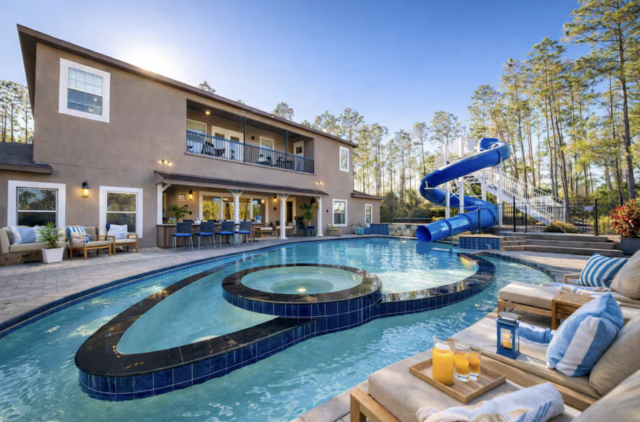
Photo Credit: https://greatescapelakeside.com/

On July 10, 2025, while family members were using the aquatic amenities, AJ tragically drowned in the property’s pool. The lawsuit alleged that despite the foreseeable dangers associated with commercial-style aquatic attractions, the property failed to provide or require:

  • Lifeguards
  • Water watchers
  • Adequate aquatic supervision
  • Appropriate operational safety measures

Can a Short-Term Rental Be Held Liable for a Drowning?

Yes. Property owners and operators may be held legally responsible when dangerous conditions or inadequate safety measures contribute to a drowning incident.

In this case, the plaintiffs argued that the property’s size, design, marketing, and aquatic features created obligations similar to those imposed on hotels, resorts, and recreational aquatic facilities.

The legal team pointed to industry guidance and aquatic safety standards, including principles reflected in the Model Aquatic Health Code (MAHC), which emphasize the importance of supervision and risk management in aquatic environments.

The defense initially argued that the property was merely a residential home and therefore not legally required to provide lifeguards. However, plaintiffs maintained that the nature of the property’s operations and amenities created a heightened duty of care.

The case ultimately resolved for the full available insurance policy limits before mediation concluded.

Growing Legal Concerns for Resort-Style Vacation Rentals

The rise of large luxury vacation rentals across Florida and the United States has created new legal and safety challenges. Many short-term rentals now include amenities traditionally associated with hotels and resorts, such as:

  • Lazy rivers
  • Water slides
  • Multiple pools
  • Sports courts
  • Commercial playgrounds
  • Large guest capacities

However, many of these properties are still classified and regulated as residential homes rather than commercial hospitality properties.This creates a significant safety gap.

Key Questions Raised by This Case Include:

  • When does a vacation rental become functionally equivalent to a resort?
  • Should resort-style STRs be required to provide lifeguards or aquatic supervision?
  • What safety standards apply to commercial-scale aquatic amenities?
  • Are current insurance coverages sufficient for catastrophic injury and wrongful death claims?

As the short-term rental industry continues to evolve, courts and juries are increasingly evaluating these properties based on how they operate and market themselves—not simply how they are labeled.

Drowning Prevention and Water Safety Awareness

The tragedy comes as Florida continues to lead the nation in child drowning incidents.

According to drowning prevention organizations:

  • Drowning is a leading cause of accidental death for young children
  • Many drowning incidents occur silently and within seconds
  • Resort pools and vacation environments can increase distractions for caregivers
  • Layered safety protections save lives

During National Water Safety Month, The Haggard Law Firm continues its commitment to drowning prevention advocacy and accountability for unsafe aquatic environments.

The Haggard Law Firm’s Commitment to Drowning Prevention

For decades, The Haggard Law Firm has represented families affected by preventable drownings and aquatic negligence cases throughout Florida and across the country.

Our attorneys work to hold negligent property owners, resorts, hotels, vacation rental operators, and aquatic facilities accountable when safety failures lead to tragedy.

If your family has been affected by a drowning or serious aquatic injury, our legal team is available to review your case.
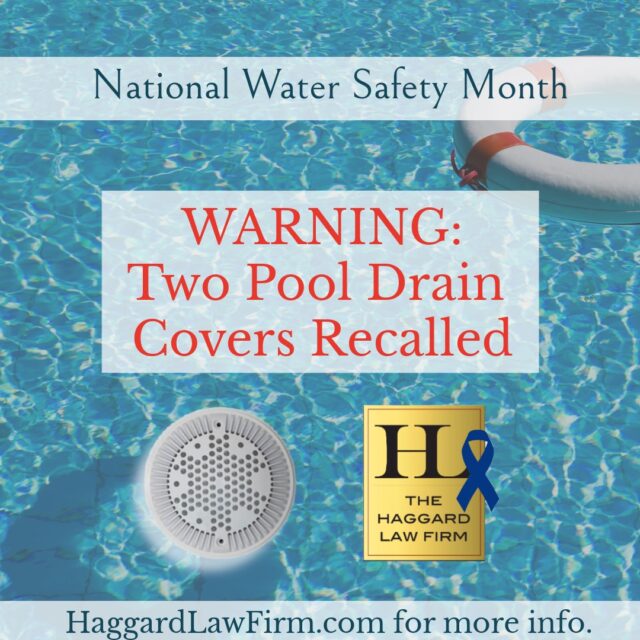
WARNING: Two Pool Drain Cover Recalls in One Week Raise Serious Entrapment and Drowning Concerns

WARNING: Two Pool Drain Cover Recalls in One Week Raise Serious Entrapment and Drowning Concerns

Pool safety is back in the spotlight after the U.S. Consumer Product Safety Commission (CPSC) announced two separate recalls of pool drain covers in the same week, both due to violations of the Virginia Graeme Baker Pool & Spa Safety Act (VGBA).

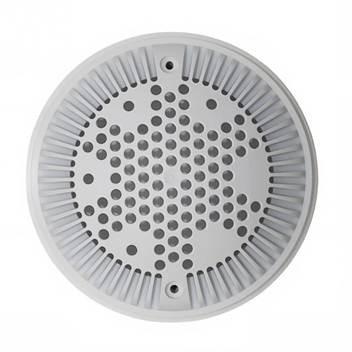
On April 9, 2026, Muscccm and Yeeluzan branded pool drain covers—both sold on Amazon—were recalled after being found to pose serious entrapment and drowning hazards.

For The Haggard Law Firm, which has litigated drowning and near-drowning cases nationwide for decades, these back-to-back recalls highlight a persistent and preventable danger: non-compliant pool equipment continuing to enter the marketplace.

Why These Recalls Are So Concerning

Both recalled products fail to meet federally mandated anti-entrapment standards under the VGBA. These safety requirements exist to prevent the powerful suction forces created by pool drains from trapping swimmers underwater.

Entrapment incidents can happen in seconds and may result in:

  • Drowning
  • Severe internal injuries, including disembowelment
  • Hair or limb entrapment
  • Permanent disability or death

Although no injuries have been reported for either recall, similar defects have led to tragic outcomes in the past.

Recall #1: Muscccm Pool Drain Covers (Recall No. 26-405)

  • Units: 480
  • Size: 7” x 6.5” x 1.8”
  • Weight: 11.7 ounces
  • Material: White ABS plastic
  • Sold: Amazon.com (Feb. 2026 – March 2026) for about $19
  • Manufacturer: Qingyuan Fenle Sauna & Pool Equipment Co., Ltd. (China)
  • Retailer: SZ Hengxun (Shenzhen Aotuolang Technology Co., Ltd.)
  • Remedy:
    Consumers should immediately stop using pools with these drain covers, remove them, photograph the removed product, and email MuscccmRecall@126.com to request a refund.
Courtesy: CPSC

Recall #2: Yeeluzan Pool Drain Covers (Recall No. 26-397)

  • Units: About 640
  • Size: Approximately 8.7 inches in diameter
  • Weight: 1.7 pounds
  • Material: White ABS plastic
  • Packaging: Sold in two-packs
  • Sold: Amazon.com (May 2025 – March 2026) for about $32
  • Retailer: Weifang Luzhan Trade Co., Ltd. (dba Yeeluzan, China)
  • Remedy, Consumers should:
  • Stop using pools with these drain covers immediately
  • Remove and destroy the product
  • Take a photo or video as proof of destruction
  • Email proof to yeeluzanrecall@163.com for a full refund
Courtesy: CPSC


Immediate Safety Steps for Pool Owners

If you own or manage a pool, take these precautions right away:

  • Inspect all pool and spa drain covers
  • Remove any recalled or non-compliant products immediately
  • Replace with VGBA-compliant drain covers
  • Educate children and swimmers to stay away from drains and suction outlets
  • Even a single non-compliant drain cover can create a life-threatening hazard.

The Law Behind These Recalls: A Tragedy That Changed Everything

The Virginia Graeme Baker Pool & Spa Safety Act was enacted following a devastating and preventable loss.

Haggard Law Firm represented the family of 7-year-old Virginia Graeme Baker after she became trapped by a spa drain. Following the civil case, Michael Haggard worked alongside the Baker family to raise national awareness about the dangers of pool drain entrapment.

Their advocacy played a critical role in advancing federal legislation, ultimately leading to the passage of the VGBA—signed into law by President George W. Bush—which established nationwide safety standards designed to prevent these exact types of incidents.

Today, the VGBA requires anti-entrapment drain covers and other protective systems in public pools and spas.

Who May Be Held Liable?

When defective pool equipment leads to injury or death, multiple parties may be responsible, including:

  • Product manufacturers
  • Online marketplaces and retailers
  • Distributors and importers
  • Pool owners, operators, and property managers

These cases often involve failures in product design, safety compliance, and oversight—issues Haggard Law Firm has extensive experience uncovering.

A Pattern That Should Not Be Ignored

Two recalls in one week involving the same type of life-safety hazard is not a coincidence—it’s a warning.

Despite clear federal requirements, non-compliant drain covers are still being manufactured, imported, and sold to consumers. Without proper oversight and enforcement, the risk of serious injury or death remains.

 Contact Haggard Law Firm

Haggard Law Firm has long been at the forefront of drowning and aquatic injury litigation, representing families in cases involving negligent pool safety and defective equipment nationwide.

If you or a loved one has been affected by a drowning or near-drowning incident, you may have legal options. Contact Haggard Law Firm to learn more about your rights and how we can help.

Pool Safety at Hotels, Apartments, and Vacation Rentals: Legal Requirements, Risks, and Accountability

Pool Safety at Hotels, Apartments, and Vacation Rentals: Legal Requirements, Risks, and Accountability

For decades, The Haggard Law Firm has represented families in fatal and non-fatal drowning cases involving commercial properties—hotels, apartment complexes, and short-term vacation rentals. These tragedies are often preventable and frequently trace back to failures to follow established pool safety laws and regulations.

As a firm committed to water safety and drowning prevention, The Haggard Law Firm works to hold negligent property owners accountable when those failures lead to devastating consequences.

Commercial Pool Safety Laws: What Property Owners Are Required to Do

There is no single nationwide rulebook for pool safety. Instead, commercial properties must comply with a combination of:

  • State laws
  • Local health and safety codes
  • Federal regulations, including the Virginia Graeme Baker Pool & Spa Safety Act (VGB Act)

These laws are designed to create layers of protection—a concept strongly supported by the National Drowning Prevention Alliance (NDPA)—because no single safety measure can prevent drowning on its own.

  1. Pool Barriers and Controlled Access

One of the most critical legal requirements is preventing unsupervised access to pools, especially for children.

Most jurisdictions require:

  • A four-sided fence (typically at least 4 feet high)
  • Self-closing, self-latching gates
  • Gates that remain secured when the pool is closed
  • Broken gates or propped-open entrances are among the most common safety failures seen in drowning accident cases.
  1. Required Lifesaving Equipment

Commercial pools must have readily accessible safety equipment, including:

  • A life ring or rescue tube
  • A reaching pole
  • A first aid kit
  • Hotels and larger facilities may also be required to have an AED (Automated External Defibrillator).

In many premises liability cases involving drowning, the absence of this equipment—or the inability to access it quickly—has played a critical role.

  1. Pool Safety Signage Requirements

Clear and visible signage is not optional. It is required and must typically include:

  • “No Lifeguard on Duty” (if applicable)
  • Posted pool rules (no diving, no running, etc.)
  • Depth markers
  • Emergency contact information
  • Maximum occupancy limits

While signage alone does not prevent drowning, failure to post proper warnings can increase liability for property owners.

  1. Water Quality and Visibility Standards
  • Pool operators are legally required to maintain:
  • Proper chlorine and pH levels
  • Clear water visibility (the bottom of the pool must be visible at all times)
  • Functioning filtration and circulation systems
  • Daily maintenance logs

Cloudy or improperly maintained water is a serious hazard and a recurring factor in commercial pool drowning incidents.


  1. Lifeguard Requirements (Varies by Jurisdiction)

Some commercial properties, particularly hotels, may be required to have certified lifeguards, depending on state and local laws.

Where lifeguards are not required:

  • Properties must clearly post “No Lifeguard on Duty”
  • Responsibility for safety shifts more heavily onto property management and safety systems

  1. Federal Pool Safety Law: VGB Act Compliance

All commercial pools must comply with the Virginia Graeme Baker Pool & Spa Safety Act, which requires:

  • Anti-entrapment drain covers
  • Additional safety systems for certain pool configurations
  • Violations of the VGB Act have led to serious injuries and fatalities, particularly involving children.


  1. Lighting and Pool Visibility

Adequate lighting is essential for safety and is often required for:

  • Nighttime pool use
  • Full visibility of all areas of the pool
  • Poor lighting conditions can delay recognition of a swimmer in distress and hinder rescue efforts.

  1. Emergency Preparedness and Staff Training

Commercial pool operators are expected to:

  • Post emergency procedures
  • Ensure staff are trained in CPR and emergency response
  • In drowning and near-drowning cases, delayed or improper response is often a key issue.

  1. Slip-and-Fall and Surrounding Area Safety

Safety extends beyond the water. Requirements often include:

  • Non-slip pool decks
  • Proper drainage systems
  • Routine inspections for hazards
  • These conditions are frequently examined in premises liability claims involving pool areas.

  1. ADA Compliance and Pool Accessibility

Under the Americans with Disabilities Act (ADA), commercial pools must include:

  • Accessible entry points (such as lifts or sloped entries)
  • Accessible routes to and around the pool
  • Failure to comply is not only a legal issue but can also create additional safety risks.

Common Pool Safety Failures That Lead to Drowning Cases

Through decades of litigation, The Haggard Law Firm has seen recurring issues in hotel and apartment pool drowning cases, including:

  • Unsecured or broken pool gates
  • Missing or inaccessible safety equipment
  • Lack of proper signage
  • Cloudy or poorly maintained water
  • Inadequate lighting
  • Failure to comply with federal drain safety laws

These are not minor oversights—they are preventable failures that can and do lead to tragedy.

Holding Negligent Property Owners Accountable

Drowning is fast, silent, and unforgiving. When commercial property owners fail to follow pool safety regulations, they put lives at risk.

The Haggard Law Firm is committed to:

  • Advocating for water safety awareness
  • Representing victims and families in drowning and near-drowning cases
  • Holding hotels, apartment complexes, and vacation rental operators accountable when negligence leads to harm

Legal action is not just about compensation—it is about accountability, prevention, and safer communities.

If You Have Questions About a Pool Safety Incident

If you or a loved one has been affected by a drowning or near-drowning at a commercial property, understanding your legal rights is critical.

The Haggard Law Firm has decades of experience handling complex pool accident and drowning litigation and remains dedicated to improving safety standards through both advocacy and accountability.

$6 Million Settlement Following Fatal Child Drowning In Retention Pond

The Haggard Law Firm’s Pedro Echarte and Michael Haggard, along with co-counsel Christopher O’Toole, have secured a $6 Million settlement in a fatal drowning case involving a 2-year-old child.

Child drownings remain one of the leading causes of accidental death for young children in Florida. When these incidents occur at apartment complexes or other residential properties, they often raise serious questions about premises liability, negligent maintenance, and compliance with safety regulations.

This case underscores how multiple failures can converge to create a preventable tragedy—and why property owners must be held accountable.

The names of the parties and specific location where the tragedy occurred are confidential per terms of the settlement

What Happened: A Preventable Retention Pond Drowning

On June 7, 2025, a 26-month-old child drowned in a retention pond located directly behind his family’s apartment unit.

The family had moved into the complex just one month earlier. Concerned about water hazards on the property, they specifically requested a second-floor unit to better protect their young child. Despite this request, they were placed in a first-floor apartment adjacent to a retention pond.

  • The unit included a screened-in patio where the washer and dryer were located. Critically:
  • The patio screen had been damaged and torn
  • The family had submitted a maintenance request to repair it
  • The repair was not completed in a timely manner

On the day of the incident, the child was home with his mother and other adult family members. While household chores were underway, the child exited through the broken patio screen, reached the retention pond, and drowned.

Dangerous Property Conditions: More Than One Failure

This case highlights several key safety failures that are frequently seen in apartment complex drowning cases:

  1. Failure to Honor Safety-Based Housing Requests

The family explicitly requested a second-floor unit due to concerns about nearby water hazards. Assigning a ground-floor unit next to a retention pond significantly increased the risk to a toddler.

  1. Negligent Maintenance and Repair

A broken patio screen created a direct and foreseeable hazard. When property owners fail to address known maintenance issues—especially those affecting child safety—they may be liable for resulting injuries or death.

  1. Unsafe Retention Pond Design

Retention ponds must comply with established safety standards. In this case, the pond allegedly failed to meet required slope regulations, which are designed to prevent sudden drop-offs into deep water.

  • Required slope: 4:1 ratio (gradual incline for safer entry/exit)
  • Actual condition: Excessively steep slope leading quickly into deep water
  • Steep embankments can make it nearly impossible for small children to regain footing once they enter the water.

Legal Issues: Wrongful Death and Premises Liability

The child’s parents pursued a wrongful death claim against the apartment complex, citing multiple grounds of negligence:

  • Failure to provide the requested second-floor unit
  • Failure to repair a known safety hazard (the patio screen)
  • Failure to maintain the retention pond in compliance with safety regulations

After conducting site inspections, surveys, and consulting with expert witnesses, the family developed substantial evidence supporting their claims.

The case was ultimately resolved pre-suit for a significant settlement, avoiding the need for formal litigation.

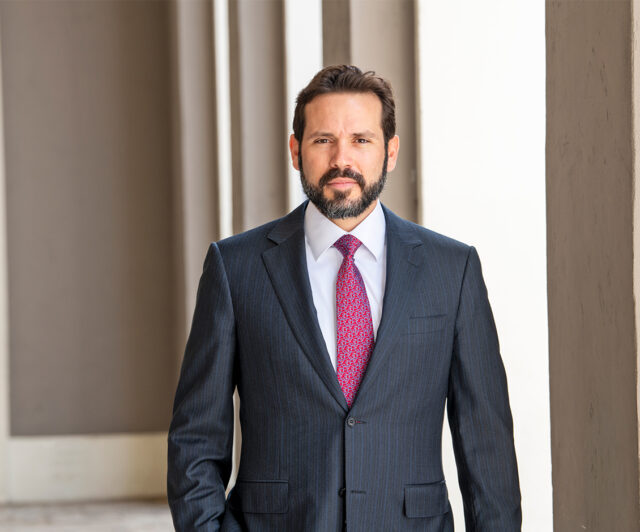
Trial Lawyer Pedro Echarte

Common Defenses in Drowning Cases

As is often the case in drowning incidents, the defendants raised several legal defenses:

  • Comparative Fault
  • The defense argued that the child was not supervised for approximately 13 minutes, suggesting that caregiver inattention contributed to the tragedy.
  • Fabre Defendants (Third-Party Fault)
  • The defendants attempted to shift blame to others who may have been responsible for supervising the child at the time.
  • Disputed Maintenance Claims

The property owner claimed the screen had been repaired after the initial request and that no follow-up work order was submitted. This was disputed by the plaintiffs.

These defenses are common in Florida drowning and wrongful death cases, but they do not eliminate a property owner’s responsibility to maintain safe premises.

Why Retention Ponds Pose Serious Risks

Retention ponds are common throughout Florida, particularly in apartment complexes, HOAs, and commercial properties. However, they can be extremely dangerous when not properly maintained.

Key risk factors include:

  • Steep or non-compliant slopes
  • Lack of barriers or protective fencing
  • Poor visibility or lighting
  • Proximity to residential units
  • Inadequate warning signage

When property owners fail to address these risks, they may be held legally accountable for resulting injuries or fatalities.


The Role of Experienced Legal Representation

Cases involving child drownings, negligent security, and unsafe premises require a thorough investigation and a deep understanding of applicable regulations and liability standards.

At The Haggard Law Firm, our attorneys have decades of experience handling fatal and non-fatal drowning cases involving:

  • Apartment complexes
  • Hotels and resorts
  • Vacation rentals
  • Residential communities

We work with engineers, safety experts, and investigators to uncover the truth and hold negligent parties accountable.


Seeking Justice After a Preventable Tragedy

While no legal action can undo the loss of a child, pursuing a wrongful death claim can:

  • Hold negligent property owners accountable
  • Bring answers and closure to grieving families
  • Help prevent similar tragedies in the future

If your family has been impacted by a drowning incident at a commercial or residential property, it is critical to understand your legal rights.

 $2.575 Million in Negligent Security Sexual Assault Case Involving Delivery Driver


$2.575 Million in Negligent Security Sexual Assault Case Involving Delivery Driver

 The Haggard Law Firm’s Maegan Bridwell, Kimberly Wald, and Michael Haggard secured a $2.575 Million recovery in a negligent security, sexual assault (abuse) case, demonstrating how property owners can be held accountable when their failures contribute to violent crimes—even when the assault occurs off-site.

The date of incident, name of defendants, and locations of case are confidential per terms of the settlement.

Case Overview: DoorDash Driver Kidnapped and Sexually Assaulted

Jane Doe, a 20-year-old DoorDash* driver, arrived at a business property to complete a delivery. As she exited her vehicle, she was immediately confronted at gunpoint by a known trespasser on the property.

She was then kidnapped and forced to drive to a nearby apartment complex, where she was sexually assaulted.

The incident raised serious questions about the business’ security failures, trespasser access, and the duty to protect lawful visitors on the premises.

(*DoorDash was not a defendant in this case)

Legal Strategy: Holding Property Owners Accountable for Negligent Security

Bridwell, Wald, and Haggard built the case around a core principle of Florida law:
Property owners and operators have a duty to maintain reasonably safe premises and protect guests and visitors from foreseeable criminal acts.

The legal team demonstrated that:

  • The assailant was aknown trespasser on the property
  • The business where the kidnapping took place, failed to implement adequate security measures
  • These failures created the conditions that allowed theabduction to occur
  • Even though the sexual assault took place at a different location, the attorneys established adirect chain of causation beginning at the initial property.

Defense Arguments—and How They Were Overcome

The defense attempted to avoid liability through several key arguments:

  • “The Area Was Safe”

Defendants argued the abduction occurred in a well-lit, low-crime area, suggesting the incident was unforeseeable.

  • “She Was Only There Briefly”

They claimed Jane Doe was on the property for only a short period of time, attempting to minimize the defendant’s responsibility.

  • “The Assault Happened Elsewhere”

The defense argued they could not be liable because the sexual assault occurred at a separate location.

  • “Minimal Impact” Argument

Defense attorneys also attempted to use Jane Doe’s social media presence to suggest she was “thriving” and had been only minimally impacted by the trauma.

The Outcome

Despite these arguments, The Haggard Law Firm successfully developed the evidence that the initial security failures set the entire chain of events in motion, leading to the attack and sexual assault.

The result: a $2,575,000 recovery for the victim.

Why This Case Matters for Negligent Security Claims in Florida

This case reinforces a critical legal principle in Florida negligent security law:

Property owners and operators can be held liable when their negligence contributes to the conditions that allow violent crimes to occur—even if the ultimate harm happens off the property.

Key Takeaways:

  • Foreseeability matters: Known trespassers and prior risks must be addressed
  • Security failures have consequences: Inadequate measures can lead to liability
  • Causation extends beyond the property
  • Victim-blaming tactics can be challenged and overcome in court

Experienced Negligent Security Attorneys in Florida

The attorneys at The Haggard Law Firm have extensive experience handling complex negligent security, sexual assault, and premises liability cases.

Michael Haggard, Maegan Bridwell, and Kim Wald are committed to holding property owners accountable and pursuing justice for victims of violent crime.

Survivor Support

Survivors of sexual assault should know they are not alone—and that legal options may be available.

The Haggard Law Firm has extensive experience representing victims of sexual assault and approaching these cases with the sensitivity, discretion, and strength they require. In addition to seeking accountability through the civil justice system, support resources are available. The VictimConnect Resource Center offers confidential, compassionate assistance and can be reached at 1-855-4-VICTIM (1-855-484-2846) or via chat at victimconnect.org.

Contact The Haggard Law Firm

If you or a loved one has been the victim of a sexual assault or a violent crime due to negligent security, you may have legal options.

Contact The Haggard Law Firm today to learn how we can help you pursue justice and accountability.

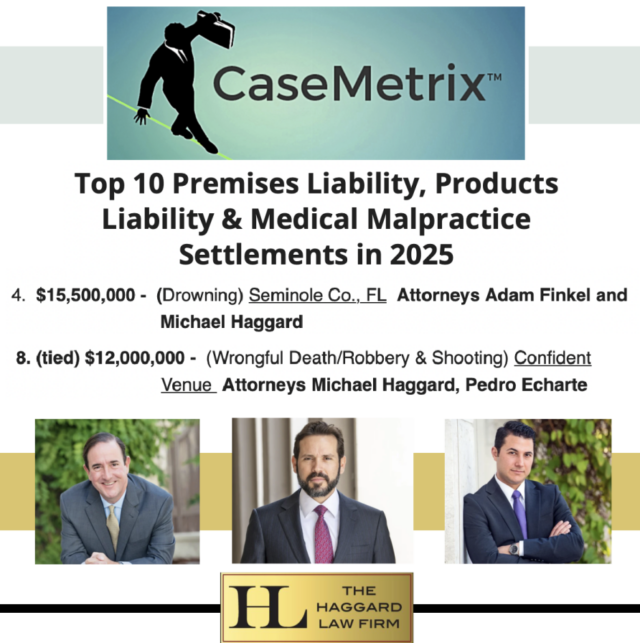
Two Haggard Law Firm Cases Among List of Top 10 2025 Settlements

Two Haggard Law Firm Cases Among List of Top 10 2025 Settlements


The Haggard Law Firm is proud to announce that two of it cases were recognized among the Top 10 Premises Liability, Product Liability, and Medical Malpractice Settlements of 2025. These cases showcase the law firm’s commitment to holding negligent property owners accountable and securing justice for families affected by preventable tragedies.

$12 Million Settlement in Negligent Security Case

In 2021, Marvin Ousley, a father of six, was shot and killed while visiting family at a complex in Jacksonville, Florida. Despite a known history of crime at the complex, the property owners failed to provide adequate security, leaving residents and visitors at risk.

Attorneys Pedro Echarte and Michael Haggard, along with co-counsel Millicent Daniels, successfully argued that the apartment complex’s negligence directly contributed to Marvin’s death. The case resulted in a $12 million settlement, providing compensation for Marvin’s children and sending a clear message that property owners have a legal responsibility to protect those on their premises.

$15.5 Million Settlement in Child Fatal Drowning Case

In another heartbreaking case, three-year-old Kai Goodlander drowned at the Huntington Reserve Apartments in Seminole County, Florida, in 2024. Kai fell into a dry detention pond that had been improperly maintained, turning what should have been a safe stormwater management system into a deadly hazard.

Attorneys Michael Haggard and Adam Finkel uncovered critical evidence showing that the property managers lacked the knowledge or procedures to maintain the pond safely. Their work led to settlements totaling $15.5 million from the property owner and management company, holding them accountable for the preventable death of a young child.

Why These Cases Matter

Both of these settlements highlight a broader issue in Florida and nationwide: property owners and managers have a legal duty to maintain safe premises. Failure to address foreseeable risks—from violent crime to unsafe water retention systems—can result in devastating consequences for families.

The Haggard Law Firm continues to champion victims of negligent security, premises liability, and unsafe property conditions, fighting for families to receive justice and that property owners uphold their responsibilities.

Learn More

If you or a loved one has been affected by a preventable injury or unsafe property, the attorneys at The Haggard Law Firm can help. Contact us today to discuss your case and understand your legal options.

$18 Million Global Settlement after Florida Judge Strikes Defendant’s Pleadings for “Fraud Upon the Court”

Florida Judge Strikes Defendant’s Pleadings for “Fraud Upon the Court” After Concealing Insurance Coverage

Osceola County, Florida — In a significant sanction ruling, a Florida circuit court judge struck the pleadings of a corporate defendant after finding clear and convincing evidence of fraud upon the court stemming from the intentional concealment of insurance coverage. The ruling results in a global settlement of $18 Million, $6 Million above policy limits.

The decision underscores the serious consequences businesses face for violating Florida’s insurance disclosure laws, particularly in high-stakes wrongful death and premises liability cases.


The Case: Wrongful Death at an Osceola County Short-Term Rental

The ruling arises from litigation handled by Pedro Echarte of The Haggard Law Firm, representing Lorrie Brown, whose son was tragically shot and killed outside a short-term rental property in Osceola County.

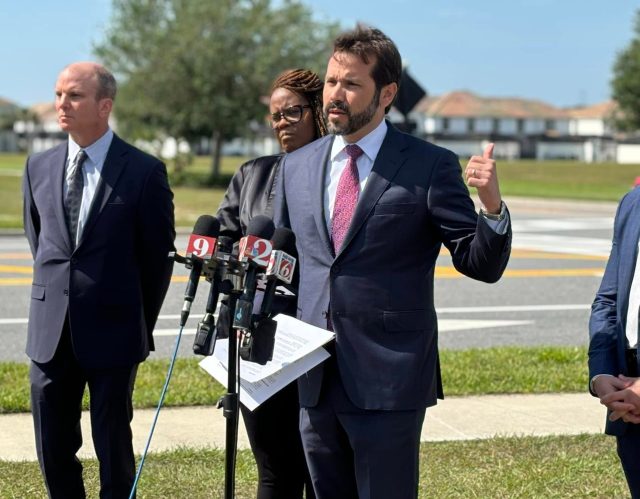
(Echarte standing with client Lorrie Brown and co-counsel)

Brown filed suit over the circumstances surrounding the fatal shooting at the Airbnb-style property, alleging liability tied to the management and operation of the premises.

Court Finds Intentional Concealment of Insurance Coverage

In a February 11, 2026 order, the court found that ICON Management Services, Inc. engaged in a deliberate and prolonged effort to conceal the existence of insurance coverage.

For more than two years, ICON repeatedly represented to opposing counsel that no insurance coverage existed.

However, evidence presented during a two-day evidentiary hearing revealed:

  • ICON was a subsidiary of Troon.
  • The company had potential coverage under Troon’s general liability insurance policy.
  • Internal emails and testimony confirmed that corporate officials and legal counsel were aware of the policies.
  • The company failed to comply with Florida Statute § 627.4137, which requires disclosure of insurance information upon request

Repeated Requests Ignored for Over Two Years

According to the court’s findings, plaintiff’s counsel made multiple requests for insurance disclosure over approximately two and a half years.

Despite these requests, ICON consistently maintained that no insurance coverage existed.

The judge rejected arguments that the failure to disclose was due to confusion or oversight, instead concluding that:

The defendant knowingly and intentionally misrepresented the existence of insurance coverage.

Strategy Aimed at Forcing Lower Settlement

The court further determined that the concealment was a calculated litigation strategy designed to:

  • Lead the plaintiff to believe that only limited coverage (through a homeowners association policy) was available
  • Restricted the plaintiff’s ability to evaluate the full scope of recoverable damages
  • The court found this conduct directly undermined the integrity of the judicial process.
  • Disclosure Only Came After New Defense Counsel Appeared
  • Critically, the existence of the insurance policy was not revealed until new defense counsel entered the case in 2025.

The new attorneys produced the insurance information within days, a fact the court cited as further evidence that prior nondisclosure was intentional—not accidental.

Sanction: Pleadings Stricken, Case Moves to Damages Trial

As a result of these findings, the court ruled that ICON committed fraud upon the court and imposed one of the most severe sanctions available:

  • Striking the defendant’s pleadings
  • Allowing one of the cases to proceed to a trial on damages only This means liability is effectively established, and the focus shifts solely to determining the amount of damages owed.

$18 Million in Exposure Across Related Cases

The ruling also impacted a second case handled by The Haggard Law Firm involving the same defendant and similar insurance issues.

Combined, the two matters settled globally for:

  • $18 million dollars.
  • Including about $6 million dollars above the available insurance policy limits


Why This Ruling Matters in Florida Personal Injury Litigation

This case highlights critical legal principles that affect personal injury and wrongful death lawsuits in Florida, including:

  1. Mandatory Insurance Disclosure

Under Florida Statute § 627.4137, defendants must disclose insurance coverage upon request. Failure to do so can result in severe sanctions.

  1. Fraud Upon the Court

Intentional deception that interferes with the judicial process—such as concealing key financial information—can lead to:

  • Striking of pleadings
  • Default judgments
  • Significant financial exposure
  1. Impact on Settlement Negotiations

Accurate insurance disclosure is essential for fair settlement discussions. Concealment can:

  • Mislead plaintiffs
  • Distort case valuation
  • Delay justice

Statement from The Haggard Law Firm

Pedro Echarte of The Haggard Law Firm emphasized that the ruling sends a clear message:

Companies that fail to comply with Florida’s insurance disclosure requirements—especially in high-exposure cases—risk severe consequences, including losing their ability to defend themselves in court. – Pedro Echarte, The Haggard Law Firm

Contact The Haggard Law Firm

If you or your family has been affected by wrongful death, negligent security, or premises liability, The Haggard Law Firm has extensive experience holding corporations accountable for misconduct.

Contact us today to learn more about your legal rights and options.

Legal DisclaimerThis blog is for informational purposes only and is not intended as legal advice. No attorney-client relationship is formed by reading or interacting with this content. Legal outcomes depend on the specific facts and applicable law, and results may vary. You should not act or refrain from acting based on this information without seeking professional legal counsel.

Sexual Assault Awareness: Survivor Support and Legal Insight

April Is Sexual Assault Awareness Month: Know Your Rights and Resources

April is Sexual Assault Awareness Month—a time to elevate the voices of survivors, provide critical information, and ensure those affected understand their rights and options.

If you or a loved one has experienced sexual assault, support is available. You can contact the National Center for Victims of Crime’s VictimConnect Resource Center at 855-4-VICTIM (855-484-2846) or visit https://victimconnect.org for confidential guidance, support, and resources.

At The Haggard Law Firm, we have spent decades advocating for survivors. Below are survivor support and legal insights everyone should know.

  • It Was Not Your Fault

Sexual assault is never the victim’s fault—no matter the circumstances. What you wore, where you were, or whether you knew the perpetrator does not excuse the harm.

  • You Can Still Seek Justice

Many survivors believe too much time has passed to take action. In reality, laws in many states—including Florida—allow survivors to come forward years later. Legal timelines vary, but options may still be available even in older cases.

  • Silence Protects Abusers — Understand Your Rights

Remaining silent can allow perpetrators to continue harming others. Speaking with an experienced attorney can help you understand your legal rights and options—empowering you to take back control of your situation.

  • You Don’t Need a Criminal Case to Take Action

A criminal case is not required to pursue justice in civil court. Even if law enforcement did not file charges, survivors can still file a civil lawsuit to hold perpetrators—and other responsible parties – accountable.

  • Institutions Can Be Responsible Too

In many cases, organizations share responsibility. Schools, workplaces, hotels, security companies, and other institutions may be held liable when negligence or failure to provide adequate safety creates conditions for abuse.

  • Preserve Evidence If You Can

If possible, preserving evidence can strengthen a case. This may include:

    • Clothing
    • Text messages or emails
    • Photos
    • Medical records

However, if evidence was not preserved, you may still have a valid claim.

  • You Are Not Alone

Support is available. Survivors can turn to counselors, victim advocates, and attorneys who focus specifically on helping those affected by sexual violence. Reaching out is often the first step toward healing.

  • Your Story Matters

Coming forward can do more than seek justice for yourself—it can help prevent future abuse. Holding perpetrators accountable often protects others and creates safer communities.

  • Consultations Are Confidential

Speaking with an attorney is completely private. A consultation does not obligate you to file a lawsuit—it simply provides information so you can make an informed decision.

  • Justice Can Be Part of Healing

Legal action is not just about financial compensation. For many survivors, it is about:

    • Accountability
    • Answers
    • Closure
    • Preventing future harm

Contact a Sexual Assault Attorney

If you or someone you love has been a victim of sexual assault, you have rights—and you deserve to understand them.

For immediate support, contact the VictimConnect Resource Center at 855-484-2846 or visit https://victimconnect.org.

To learn more about your legal options, The Haggard Law Firm is here to help you navigate the path forward with compassion, confidentiality, and experience. Contact us


Legal DisclaimerThis blog is for informational purposes only and is not intended as legal advice. No attorney-client relationship is formed by reading or interacting with this content. Legal outcomes depend on the specific facts and applicable law, and results may vary. You should not act or refrain from acting based on this information without seeking professional legal counsel.

SeaWorld Ride Incident Renews Safety Discussion

Theme Park Ride Injuries: What Victims Need to Know After Reported SeaWorld Orlando Incident
Theme parks and tourist attractions are designed to provide fun and excitement, but when accidents occur, guests can be seriously injured. Recent news media reports have highlighted an incident at SeaWorld Orlando, underscoring how quickly a day of entertainment can become a medical emergency—and why injured guests may have legal rights.
For decades, The Haggard Law Firm has represented individuals and families harmed during theme park rides, vacation excursions, parasailing accidents, scuba diving incidents, and other entertainment-related activities. When negligence contributes to an injury, victims may have the right to seek compensation for medical bills, lost income, and long-term suffering.
Guests Hospitalized After SeaWorld Orlando Ride Pause
According to news reports from WESH and other media outlets, six guests at SeaWorld Orlando were transported to a nearby hospital after a ride experienced a “pause” lasting approximately seven minutes.
The Orange County Fire Rescue Department reportedly confirmed that several riders began feeling unwell during the stoppage, prompting emergency responders to assist. Media coverage indicates that the injuries were non-life-threatening, and that the guests were taken to the hospital as a precaution.
SeaWorld, in statements reported by the media, noted that the ride resumed normal operations shortly after the incident and emphasized that guest safety is a top priority.
When Entertainment Attractions Become Dangerous
Millions of visitors travel to Florida each year to experience theme parks, water parks, parasailing excursions, scuba diving tours, zip lines, and other tourist activities. While these attractions are designed with safety in mind, accidents can occur due to:
  • Mechanical failures or poor ride maintenance
  • Inadequate safety inspections
  • Improper staff training or supervision
  • Dangerous ride design
  • Failure to warn about known hazards
Even a brief ride stoppage or malfunction can cause injuries such as:
  • Neck and spinal injuries
  • Traumatic brain injuries
  • Loss of consciousness
  • Psychological trauma
  • Falls during evacuations
  • Heat exhaustion or panic attacks
Water-based excursions like parasailing or scuba diving can result in even more severe injuries, including drowning, equipment failure, or decompression sickness.
Legal Rights of Guests Injured at Theme Parks or Tourist Attractions
Under Florida law and general premises liability principles, operators of theme parks and entertainment attractions owe a duty to maintain reasonably safe conditions for their guests.
If a park or excursion operator fails to address a known hazard—or should reasonably have known about a dangerous condition—they may be held legally responsible for injuries.
Victims may be able to pursue compensation for:
  • Medical expenses
  • Future medical treatment
  • Lost wages or reduced earning capacity
  • Pain and suffering
  • Emotional distress
  • Permanent disability
  • Wrongful death damages in fatal incidents
Although many attractions require guests to sign liability waivers, these waivers do not always eliminate the right to file a claim, particularly in cases involving negligence.
The Haggard Law Firm’s Experience With Entertainment and Tourism Injury Cases
The Haggard Law Firm has decades of experience representing victims of serious accidents, including:
  • Theme park ride malfunctions
  • Resort and hotel negligence
  • Parasailing accidents
  • Scuba diving and water excursion injuries
  • Boat and jet ski incidents
  • Amusement ride design defects
  • Tourist attraction injuries
These cases often require detailed investigations, including review of ride maintenance logs, safety inspections, and operator training records.
Steps Injured Guests Should Take After a Theme Park or Excursion Accident
If you or a loved one is injured at a theme park, resort attraction, or vacation excursion, consider the following steps:
  1. Seek immediate medical attention, even for minor injuries.
  2. Report the incident to park management and request written documentation.
  3. Document the scene with photos or videos when possible.
  4. Collect witness information from other guests.
  5. Keep tickets, waivers, and other ride documentation.
  6. Consult an experienced injury attorney before speaking with insurance representatives.
Protecting Victims and Families After Tourist Attraction Accidents
While theme parks and tourist attractions prioritize safety, incidents—like the one reported at SeaWorld Orlando—show that unexpected hazards can occur.
Victims and families should understand their legal rights and may be entitled to seek compensation for injuries or losses caused by negligence.
For decades, The Haggard Law Firm has been advocating for guests and families injured during theme park rides, vacation excursions, and other recreational activities, ensuring that negligent operators are held accountable. contact us
A portion of this article is based on publicly reported news media accounts. The Haggard Law Firm is not responsible for the accuracy of these reports, and the information provided here is for general legal awareness only.