Tesla’s Smart Summon Dilemma: Who Will Be Held Accountable for Tesla’s Risky Push Into Autonomous Technology?
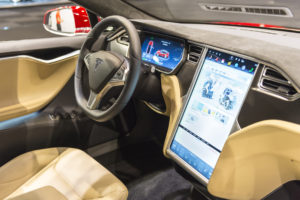
The latest controversy surrounding Tesla’s push into autonomous driving technology has sparked an investigation by U.S. safety regulators into its “Actually Smart Summon” feature. This feature, which allows drivers to summon their parked vehicles using a smartphone, has been linked to numerous incidents, raising serious questions about the safety of the technology and the potential risks for consumers.

What is the Technology and How Does it Work?

Tesla’s Smart Summon technology, available on nearly 2.6 million vehicles, including the Model S, Model 3, Model X, and Model Y, allows drivers to maneuver their cars into position remotely. However, the technology’s limitations are becoming clear: the cars have been reported to fail to detect obstacles, such as parked cars or posts. According to the National Highway Traffic Safety Administration (NHTSA), at least four crashes have been linked to the “Actually Smart Summon” feature, while a dozen other incidents were tied to its predecessor, the “Smart Summon.”

Fortunately, none of these incidents led to injuries, but the investigation is likely to prompt renewed scrutiny over Tesla’s self-driving ambitions and the safety of its technology. In fact, the NHTSA is also investigating Tesla’s more widely-known Autopilot features, which have been linked to some fatal crashes.

Elon Musk has long been an outspoken proponent of self-driving technology, emphasizing its safety and potential to revolutionize transportation. He’s argued that the risk of using Tesla’s autonomous technology is lower than conventional driving. Despite these claims, the investigation into the Smart Summon feature casts doubt on the readiness of this technology for widespread use.

Tesla’s manual advises that Smart Summon is best used in familiar environments, like driveways, and requires a clear line-of-sight between the driver and the car. The company also specifies that Smart Summon is not meant to be used on public roads. However, as the feature is currently in use across millions of vehicles, the safety implications of Tesla’s self-driving technology remain in question.

A Closer Look at the Problem

What is particularly concerning is the lack of oversight in how quickly these vehicles can move while the Smart Summon feature is in use, as well as the apparent lack of restrictions that could prevent drivers from attempting to use it on public roads. This raises a fundamental question: how prepared are Tesla and regulators to handle the real-world consequences of autonomous driving technology when issues like these are still emerging?

This investigation is just the beginning of what could be a much larger discussion around the safety of autonomous driving technology and its place in everyday transportation. The NHTSA’s probe could ultimately lead to a recall, but the larger issue of accountability remains. Who will be responsible if Tesla’s technology causes harm to consumers or the public? How will regulators address the growing concerns over self-driving features that, despite their potential, seem to be outpacing safety protocols?

For Tesla, the pressure is mounting. With numerous investigations into the safety of its autonomous driving features and an administration that has promised to reduce regulation, it’s uncertain how the future of self-driving technology will evolve. As we continue to see more developments, the question remains: Will Tesla’s groundbreaking technology continue to push boundaries, or will safety concerns cause the brakes to be applied?

Contact a Florida Personal Injury Lawyer Today for Immediate Assistance

If you or a loved one has been injured due to a vehicle defect, malfunction, or any other type of accident, contact a Florida personal injury lawyer today to discuss your legal rights and options.

The post Tesla’s Smart Summon Dilemma: Who Will Be Held Accountable for Tesla’s Risky Push Into Autonomous Technology? appeared first on Searcy Law.
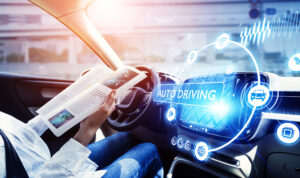
Driverless Dilemma: Are We Lab Rats? Without Legal Recourse in the Experiment of Autonomous Driving?

In the maze of today’s technological advancements, our society is standing at a crossroads where progress meets safety. The intricate web of autonomous driving technology and legislative accountability is unraveling in front of our eyes, with recent events bringing the conversation into sharp focus.

At the heart of this discussion is a tragic incident involving an Apple engineer, Walter Huang, whose fatal accident in 2018 was attributed to Tesla’s Autopilot feature. This case, culminating in a settlement, has served as a grim reminder of the challenges and responsibilities of pioneering technologies. As with any significant advancement, the march of automation and artificial intelligence within the automotive industry demands that legislative frameworks adapt and evolve.

Despite the rapid pace of technological progress, there is a discernible lag in how the legal system responds, often leaving consumers vulnerable to the shortcomings and potential risks of these new technologies. This gap is particularly evident with autonomous driving, where innovation has surpassed regulation, as seen in the recent controversies enveloping Tesla’s Autopilot feature.

As an oversight body, the National Highway Traffic Safety Administration (NHTSA) has taken significant steps to scrutinize automated driving systems. The agency’s extensive investigations have revealed a startling number of crashes linked to Autopilot, further underscoring the necessity for robust regulation. The NHTSA’s deep dive into more than 956 incidents where Autopilot was reported in use, resulting in over 40 investigations and 23 fatalities, lays bare the urgent need for a safety-first approach to automotive innovation.

Moreover, the insights of Jon McNeill, Tesla’s former president, provided a candid look into the duality of Autopilot’s nature back in 2016. In an email cited by the Wall Street Journal, McNeill acknowledged the ease of use and the risk of overreliance, stating, “I got so comfortable under Autopilot that I ended up blowing by exits because I was immersed in emails or calls.” This seemingly innocuous statement hinted at a broader truth about the seductive comfort of automation, highlighting the fine line between convenience and complacency.

Tesla’s public stance on the matter has been one of advocacy for the safety benefits that Autopilot offers. Their communications emphasize the system’s ability to reduce accidents when compared to conventional driving. However, this has yet to translate into an acceptance of liability for the potential risks. Tesla maintains that Autopilot is an adjunct to a vigilant driver and not a substitute—a point reiterated in their defense during the lawsuit.

But the concern lies in the real-world application of these advancements. When companies like Tesla use real people and actual driving conditions as test beds for their unfinished driverless technology, the question of consumer safety becomes paramount. Robert Sumwalt of the NTSB has expressed apprehension about this approach, stating in a letter to the NHTSA, “Tesla is testing on public roads a highly automated AV technology but with limited oversight or reporting requirements,” and highlighting the “potential risk to motorists and other road users” due to NHTSA’s lenient stance on AV testing oversight.

In a landscape where public roads have become testing grounds for companies like Tesla, and with pointed concerns from NTSB’s Robert Sumwalt about such practices, we’re left to ponder the adequacy of our regulatory frameworks. Sumwalt warns of the inherent risks in Tesla’s current approach, testing highly automated technologies “with limited oversight or reporting requirements.” This scenario draws us to a pressing question: With the potential dangers outlined by regulatory bodies, how will accountability be enforced to protect the public from the risks of unfinished autonomous technologies?

In Florida, the legal landscape for autonomous vehicles is already shaping the roads we travel. Under section 316.85, Florida Statutes, the state permits vehicles to operate without a human driver. This is undoubtedly a significant leap into the future of transportation, highlighting the urgency for thorough safety protocols and laws that can keep pace with such advancements. The reality of driverless cars navigating the streets raises inevitable concerns about safety and accountability, prompting a vital dialogue on how to protect consumers in this new era of autonomy.

This problem is further complicated by legislative proposals from Florida legislators who have sought to grant immunity to operators of remotely controlled vehicles. Such legislative moves could create a legal shield for auto manufacturers, potentially at the expense of consumer protection. This prospect raises alarms about prioritizing industry interests over individual safety, setting a precedent that could ripple through other jurisdictions.

In this evolving landscape, consumer safety cannot merely be an afterthought—it must be the guiding principle that shapes the evolution of our legal systems, ensuring that consumers’ rights are upheld and protected. The public’s ability to recognize the potential hazards of allowing auto manufacturers to innovate without stringent oversight is crucial. The drive for technological advancement must not be allowed to overshadow the need for accountability, especially when public safety is at risk.

Too often, the implications of insufficient oversight remain unseen until they have a direct impact on individuals or their loved ones. This underscores the importance of informed and proactive citizen engagement in shaping the policies that govern auto safety and technological development. With this knowledge, we can collectively guide the trajectory toward a future where innovations like Tesla’s Autopilot and remotely operated vehicles do not overshadow everyday citizens’ fundamental rights and safety.

The post Driverless Dilemma: Are We Lab Rats? Without Legal Recourse in the Experiment of Autonomous Driving? appeared first on Searcy Law.

How Can You Have Safety in the Face of Deceptive Marketing? The Critical Battle for Booster Seat Safety and Deceptive Marketing – A Legal Perspective

As a lawyer handling product liability cases, I’ve come across numerous instances that highlight the often dangerous shortcomings of child safety products. But nothing quite underscores the gravity of this issue like the comprehensive report by the U.S. House of Representatives Subcommittee on Economic and Consumer Policy on misleading marketing by Booster Seat Manufacturers. This report not only aligns with the disturbing trends I’ve observed in my practice but also sheds light on the alarmingly deceptive practices within the booster seat industry.

The Subcommittee’s investigation, a document dense with evidence and expert testimony, reveals a chilling reality: industry videos of booster seat side-impact tests clearly demonstrate that some children are placed in serious jeopardy when using these products. These videos are not some obscure technicality; they are visual evidence that children are at risk—a fact that has become a somber backdrop to my legal advocacy.

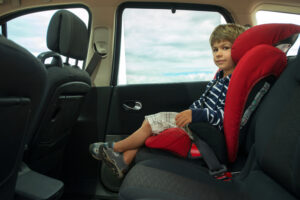
I represented a young girl who suffered paralysis after using a booster seat that was deceptively marketed as “side-impact tested” and as “meeting or exceeding all federal regulations.” Unbeknownst to the girl’s parents, the manufacturer had not designed the booster seat to provide side-impact protection especially given that there are no federal regulations concerning side-impact protections —facts concealed by the car seat manufacturer. The Subcommittee’s report revealed the perilous implications of such deceptive marketing. Evenflo, one of the implicated manufacturers, promoted its booster seats for children weighing as little as 30 pounds, directly contradicting the longstanding expert consensus that booster seats should not be used for children under 40 pounds. Despite facing multiple recalls in Canada for disregarding this safety guideline, Evenflo continued to market its products for 30-pound children in the U.S., investing significant resources to sustain this hazardous recommendation.

The Subcommittee’s findings are a searing indictment of the industry’s practices. They state: “Evenflo gives its booster seat a passing grade every time a child test dummy does not fully eject and the seat itself does not physically break apart.” This is a harrowing revelation—safety is reduced to the bare minimum, far removed from the realities of a crash. Graco and KidsEmbrace have similarly been called out for creating their own “weak testing conditions,” grading their booster seats on standards that are “nearly impossible to fail.”

The repercussions of these findings are not merely academic. As a legal professional who has seen the aftermath of these failures, I can attest to the profound impact on families. The NHTSA’s inaction, noted by the Subcommittee for not implementing a 40-pound minimum weight requirement nor establishing a side-impact testing standard, is not just a bureaucratic oversight—it’s a regulatory failure that has life-altering consequences.

In my practice, I’ve dedicated myself to challenging these dangerous practices and holding manufacturers accountable. The case I represented is a stark example of the vital role legal action plays in industry reform. By litigating, we do not only seek compensation for victims—we also push for transparency and safety improvements. If you have been affected by such negligence, the legal system provides a path to both personal restitution and the broader goal of industry-wide change.

The Subcommittee has made its stance clear, recommending that “NHTSA fulfill its duty to regulate booster seat safety” and encouraging the Federal Trade Commission and state Attorneys General to investigate and act upon these consumer protection violations. As a legal advocate and a father to 3 small children, I echo this call for action. It is high time that booster seat manufacturers are held to account not only in the courtroom but also in the court of public opinion.

We stand at a crossroads where each of us has the power to demand better standards and safer products. By staying informed, supporting legislative changes, and advocating for the enforcement of existing consumer protection laws, we can collectively ensure that the safety of our children is not a negotiable aspect of product design. The legal avenues available to us are not just for rectification but are tools for prevention, ensuring no other child suffers as a result of corporate negligence.

In conclusion, as we move forward, let us do so with the knowledge that our actions today will safeguard the child passengers of tomorrow. The fight for better safety standards in booster seats is far from over, but with continued vigilance and legal advocacy, we can make significant strides toward a future where deceptive marketing and inadequate testing are relics of the past.

Reference: “Booster Seat Manufacturers Give Parents Dangerous Advice: Misleading Claims, Meaningless Safety Testing, and Unsafe Recommendations to Parents About When They Can Transition Their Children from Car Seats to Booster Seats,” Staff Report, Subcommittee on Economic and Consumer Policy, Committee on Oversight and Reform, U.S. House of Representatives, December 10, 2020. oversight.house.gov

The post How Can You Have Safety in the Face of Deceptive Marketing? The Critical Battle for Booster Seat Safety and Deceptive Marketing – A Legal Perspective appeared first on Searcy Law.